20 July 2026 Admin
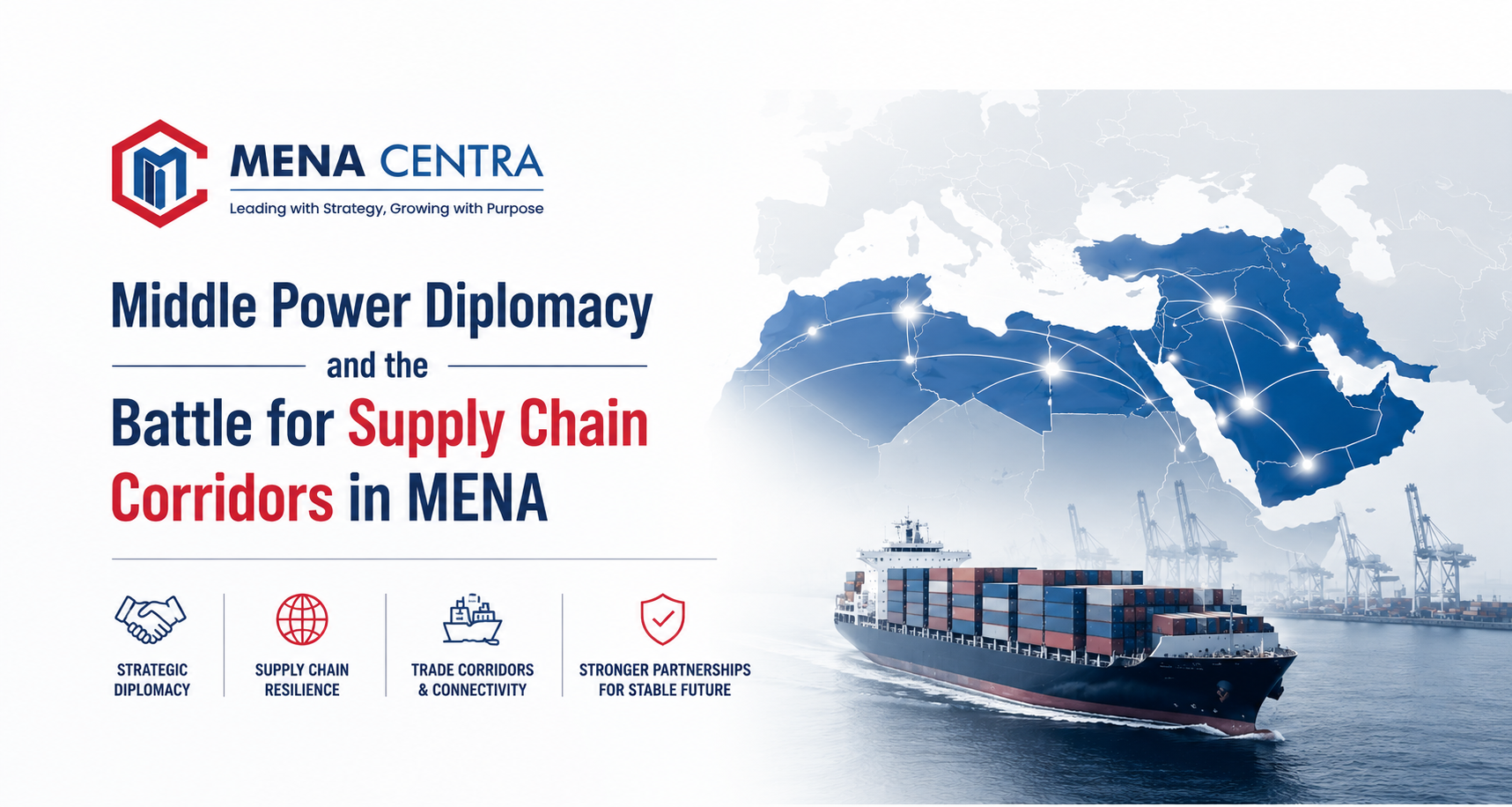
There is a quiet war happening across the Middle East and North Africa, and it has nothing to do with tanks or borders. It is being fought with ports, railways, and pipelines. Welcome to the new era of Middle Power Diplomacy, where countries that once relied purely on oil wealth or military alliances are now competing to control the routes that move the world's goods.
For decades, global power was measured in barrels of oil and the size of a country's army. That calculus is shifting.
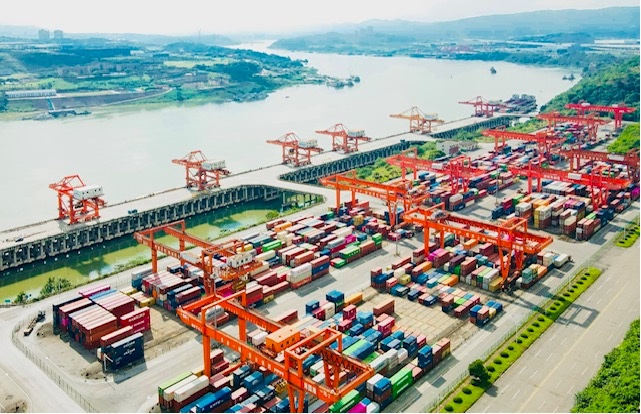
Today, a nation's influence is increasingly tied to how many Supply Chain Corridors run through it, how efficiently its ports move containers, and how many rival powers depend on its infrastructure. Today, MENA countries like Saudi Arabia, the UAE, Qatar, Turkey, and Egypt are not waiting for the old rules to catch up. They are writing new ones.
The pandemic exposed just how fragile global trade routes really are. Do you remember the time when a single ship stuck in the Suez Canal in 2021 cost the world economy billions of dollars a day? Since then, governments and businesses have raced to diversify their trade routes, with the MENA region emerging as the strategic crossroads of this global realignment.
This is where Middle Power Diplomacy comes in. Countries like the UAE and Saudi Arabia are not superpowers in the traditional sense, but they hold something arguably more valuable in today's world, which is geography. They sit between Asia, Europe, and Africa, and they know it. Rather than picking a side between the United States and China, these states are positioning themselves as indispensable middlemen, hosting Supply Chain Corridors that both powers need.
Take IMEC, the India-Middle East-Europe Corridor. You've probably seen the headlines already, big rail and shipping project linking India to Europe through the Gulf, Jordan, and Israel. Everyone's calling it the West's answer to China's Belt and Road Initiative, and yeah, that's part of it. But that's not really what the Gulf states care about.
Here's the thing nobody's saying out loud. For Saudi Arabia and the UAE, IMEC was never about picking the US over China. It was about making sure they didn't have to pick at all but owning a piece of infrastructure that both superpowers need.
That's Middle Power Diplomacy in its most brutally practical form. Forget alliances and treaties. Just become the road nobody can afford to skip.
Turkey and Egypt are playing a similar game, though from a different angle. Turkey's control over key land routes and Egypt's grip on the Suez Canal give both countries outsized influence over Supply Chain Corridors that connect three continents. Neither of these countries needs to build a new corridor from scratch. They already sit on one of the most valuable pieces of real estate in global trade.
Then the Red Sea attacks happened, and shipping companies panicked. Almost overnight, vessels started taking the long way around Africa instead, adding weeks to delivery times and millions in extra fuel costs just to avoid the risk. It wasn't just a headache for shipping companies either. It made everyone stop and ask a harder question: which countries can we actually count on when things go sideways, and which routes are worth betting on for the next twenty years?
Gulf states saw this opportunity and took it. Ports like Jebel Ali and Dammam suddenly got pitched as the safer bet, the reliable alternative when the usual routes turned risky. And that's the part people miss about Supply Chain Corridors.
They were never just about cutting a few days off a delivery. They're about trust. Who do you believe will still be standing, and still be safe, when the next crisis hits? That's the exact question Middle Power Diplomacy was built to answer.
The countries that master this new game will not necessarily be the biggest or the wealthiest. They will be the ones who make themselves essential. A corridor cannot function without the cooperation of the states it passes through, and that gives even smaller nations real bargaining power.
This is the heart of Middle Power Diplomacy today. It is less about matching a superpower's military budget and more about becoming the node that no global supply chain can route around. For MENA, a region long defined by conflict and oil dependency, this represents a genuine shift in how power is built and maintained.
The next decade will likely see even more competition over Supply Chain Corridors, as countries race to host rail lines, expand ports, and secure trade agreements that lock in their relevance for years to come.
Middle powers that master the language of corridors and connectivity have everything it takes to shape trade routes, broker influence, and create value in a region redefining its place in the world. At Mena Centra, this is the work we do daily, connecting policy, trade, and diplomacy so that the region's corridors are built to last.