16 July 2026 Admin
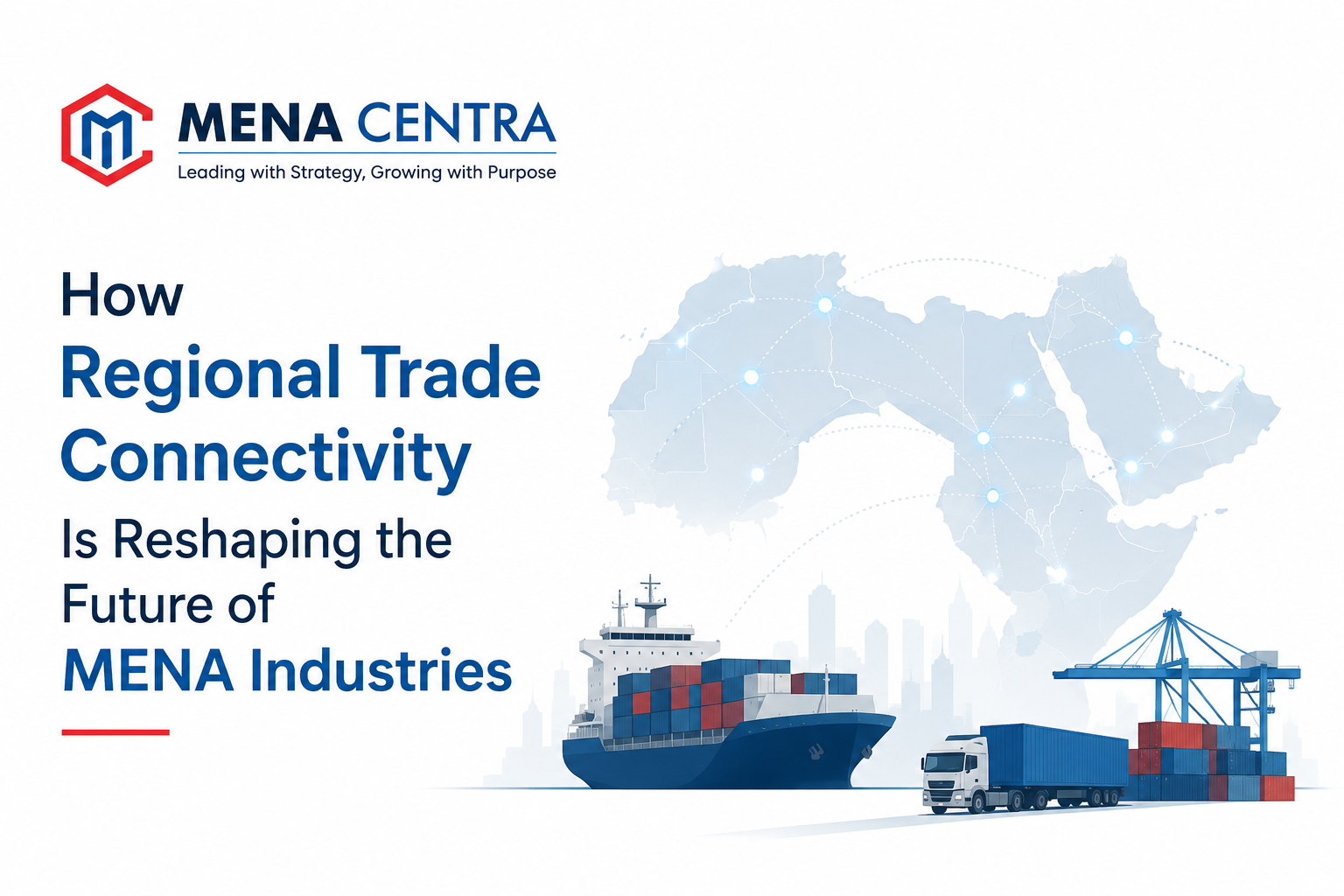
Regional trade connectivity, global logistics management, and energy corridors in Turkey are converging into a single growth story for the Middle East and North Africa. Together, they are changing the way goods, capital, and energy cross borders. As regional connections grow stronger, businesses can no longer be confined to a single- country strategy. Instead, they should enter into new markets, explore cross-border partnerships, and unlock new opportunities for investment and long-term growth.
As the MENA region deepens its economic integration, these three forces are playing an increasingly important role in shaping the future of MENA.
Regional trade connectivity refers to the degree to which countries within a region can move goods, services, capital, and people across borders with minimal friction.
It includes:
Physical infrastructure, such as ports, roads, and rail.
Soft infrastructure, such as customs procedures and digital trade platforms.
Policy frameworks that govern tariffs, standards, and market access.
MENA has historically lagged behind other regions in connectivity. The gap is not just a statistical gap; it reflects lost business opportunities, lower investment, and slower economic growth across the region. According to IMF estimates, Intra-regional trade represents about 8 percent of MENA's total exports and imports, compared to about 60 percent in the European Union.
A handful of frameworks are doing the heavy lifting on regional integration. The Greater Arab Free Trade Area (GAFTA) remains the broadest tariff-reduction framework among Arab states, though enforcement and non-tariff barriers continue to dilute its impact. The EU-Turkey Customs Union gives Turkey a unique bridging role between European and Middle Eastern markets. Newer trade provisions tied to Gulf-Israel normalization agreements are also beginning to open commercial channels that were politically closed for decades. Each of these frameworks solves a different layer of the connectivity problem. But this is not sufficient, which is why coordinated, accelerator-style approaches matter.
Despite these frameworks, structural bottlenecks persist. Customs procedures vary widely in speed and digitization across the region, creating unpredictable transit times. Standards and certification requirements are rarely harmonized, forcing exporters to duplicate compliance work for each destination market. Physical infrastructure gaps, particularly in rail connectivity between North Africa and the Gulf, add further friction. Global trade in goods and services surpassed $35 trillion in 2025, a new record, yet MENA's share of that growth has been constrained precisely because these structural issues have not been resolved at the pace global trade has accelerated.
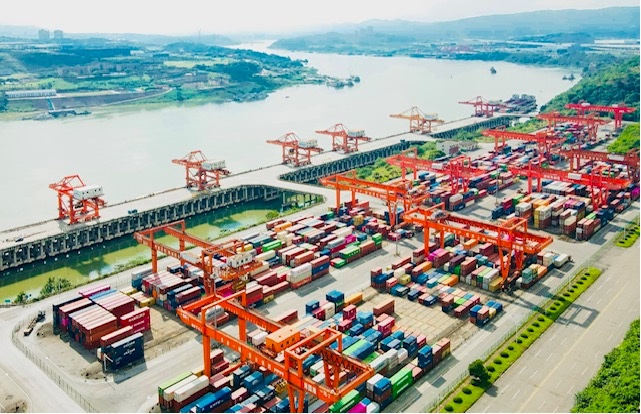
Global logistics management is the connective link between regional production capacity and international demand. For MENA manufacturers, success increasingly depends on being part of integrated transport networks that connect sea, rail, and air freight. Ports like Jebel Ali, Tanger Med, and Jeddah Islamic Port help connect manufacturers in the MENA region with major global markets, making it easier to move goods across continents.
Today, technology is transforming global logistics throughout the region. However, improved shipment tracking, planning, and digital freight tools are helping companies move goods more efficiently by cutting costs and responding faster to disruptions. For many MENA logistics operators, investment in these systems is no longer optional, but essential, if they have to remain competitive.
Trade is becoming so unpredictable due to geopolitical tensions, climate-related events, and shifting trade policies. This unpredictability is creating new challenges for businesses. Companies in MENA are responding by building more agile supply chains, exploring alternative transport routes, and implementing global logistics management. This allows them to handle disruptions and be reliable partners for global buyers.
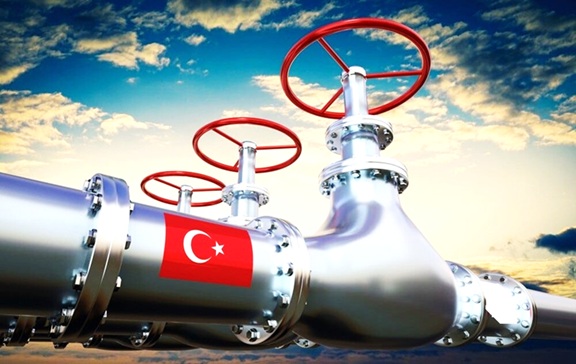
Turkey’s position has made it a crucial link between energy producers and European markets. The country is important for regional natural gas transportation through projects such as TANAP, and planned capacity expansions could boost the country’s position as a major energy transit hub.
As Europe tries to diversify its energy supplies, Turkey’s energy strategy is becoming more important. Turkey is also strengthening its position as a burgeoning energy market and major transit route through expanding its energy infrastructure and increasing domestic gas production. This puts the country in a good position to influence regional energy flows in the years to come.
Investment in energy corridors is much more than the energy sector. Good energy infrastructure reduces costs and improves reliability for manufacturing, petrochemicals, and other industries. Major energy projects tend to be accompanied by broader industrial investment in the surrounding areas.
One of the biggest opportunities in MENA is to look at trade, logistics, and energy as part of the same system. These areas are interlinked, and improvements in one can create benefits in the other areas. This integrated approach can unlock greater efficiency, competitiveness, and long-term growth for governments and investors alike.
Morocco and Turkey are cases of how trade, logistics, and energy strategies can complement each other. One should learn from such examples how strong infrastructure and reliable energy access have helped in attracting investment. These countries also show that the greatest benefits are when these areas are built together, not separately.
Trade agreements exist across all the regions. However, inconsistency in the implementation of agreements limits the benefits. Therefore, differences in regulations, tariffs, and product standards continue to create hurdles in effective trade. Such hurdles highlight the need for stronger regional coordination and long-term political commitment.
Infrastructure gaps continue to constrain regional trade, despite progress. There are limited rail links between North Africa and the Gulf. However, some border crossings are struggling to cope with increasing trade volumes. These challenges are reasons why businesses need more collaboration between governments, development institutions, and private investors.
The future of regional trade connectivity will depend as much on digital systems as physical infrastructure. Even a smaller investment can improve trade efficiency through faster customs processes, digital trade documentation, and the standardisation of the shared data. Countries such as the UAE and Saudi Arabia are already moving in this direction, positioning themselves to benefit from shifting global supply chains.
The role of an energy corridor in Turkey is gradually expanding beyond traditional fuels. With investments in wind, solar, and green hydrogen growing, Turkey is now well-positioned to support Europe's rising demand for low-carbon energy. However, Turkey’s existing energy infrastructure itself is creating new opportunities for long-term industrial growth and regional investment.