
21 September 2026 Admin
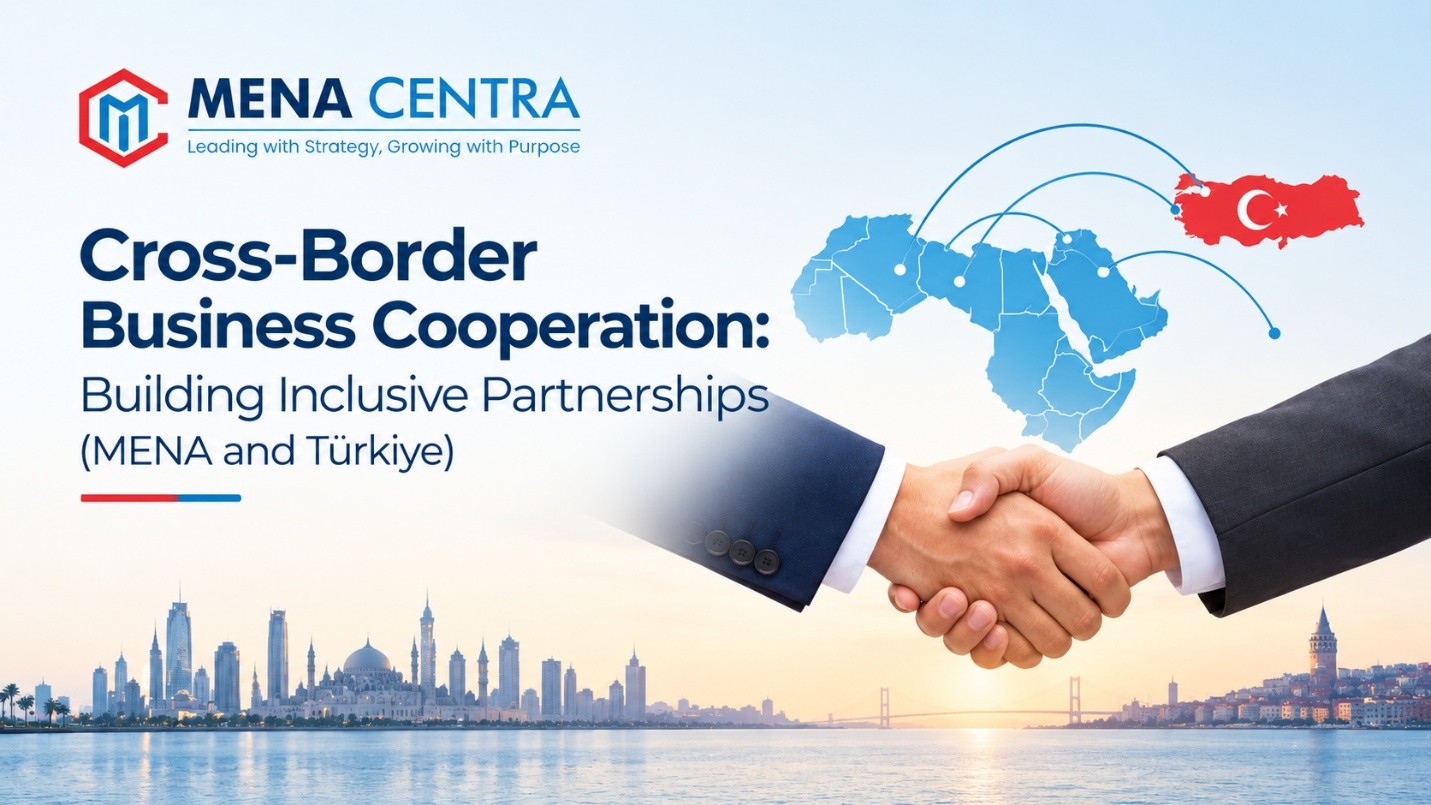
Two economies don’t just become closer through a trade deal. They grow closer because people on both sides choose to see that the effort they are putting are worth it. They keep showing up because of this belief. This is the real driving force behind cross-border business cooperation between MENA and Türkiye.
You can’t define a cross-country business relationship with only numbers. Capital moves. Goods cross borders. Deals get signed in meeting rooms on both sides. Irrespective of the numbers some partnerships last for decades while some fall apart within a year of signing. The real difference is harder to find. It lies somewhere you never thought it would be.
This article looks at that missing piece. It looks at what cross-border cooperation really needs, beyond capital. It looks at why women and youth economic empowerment matter more than most strategy papers discuss. And how cross-cultural leadership decides the length of the partnership.
Cross-border business cooperation means firms, investors, and institutions from different countries working together. They share resources. They share knowledge. They build things they could never build alone.
This cooperation can take many different forms such as:
MENA and Türkiye show this well. Each side brings something different to the table. One may offer capital. The other may offer talent or access to new markets. A tech firm in Istanbul might need distribution partners in the Gulf. A manufacturer in the Gulf might need engineering talent based in Türkiye. When these strengths meet, both parties benefit.
There is no second thought on this. The more skilled workforce you have, the better the results will be.
Women lead teams. Many build products that sell well in their home markets. What holds many of them back is not ambition. It's access.
Three gaps show up again and again. The first is introductions. Founders without a strong network struggle to find the right partners abroad, no matter how good their product is. The second is capital at the right stage. Many women-led firms can raise a small first round, but struggle to find growth funding once they need to scale. The third is visibility. A business can be well known in the home country, but it can be unknown to investors and buyers in the neighbouring country.
Quality cross-border partnerships fill these gaps. A supplier introduction in Riyadh. A funding connection in Istanbul. A joint venture that gives a business its first real footing outside its home market. None of this needs to be theatrical. It just needs to happen consistently. One relationship at a time.
The younger generation has two unique kinds of strengths. They are comfortable using digital tools. And they are also more willing to challenge old ways of doing things.
These qualities do not guarantee success. But when young people get the right opportunities, they do wonders in the market. They learn how business operates in practice, not just how it is described in reports. That can happen only through organised attempts like,
Take a young founder in Cairo who spends six months working with a mentor in Ankara. They return with new contacts, which is good. But they also return with a sharper read on their own market, because they've seen an alternative way of solving the same problems. That shift in thinking matters more than the contacts themselves.
Cross-cultural leadership means knowing how to work nicely when different business cultures are involved. It does not mean ignoring differences. It means understanding them. Then using that understanding to build trust.
Good cross-cultural leaders do a few things well. They:
This matters a lot between MENA and Türkiye. Business cultures are different everywhere. A negotiation style that works well in one market might feel too direct in another. Thus, leaders who take time to learn the local context tend to build stronger business partnerships.
Good ideas need real tools behind them. Here are the ones that work.
|
Mechanism |
What it does |
|
Mentorship networks |
Links experienced leaders with new entrepreneurs |
|
Women-led business partnerships |
Opens access to markets and suppliers abroad |
|
Youth entrepreneurship programmes |
Gives young founders skills and global exposure |
|
Knowledge and skills exchange |
Shares expertise across trade and technology |
|
Regional business forums |
Brings entrepreneurs, investors, and policymakers together |
Each of these turns a good intention into something real. They give women and youth an actual path into cross-border business. Not just a mention in a strategy paper. A mentorship match, for example, can shape a founder's next five years.
Stronger cooperation needs much more than just signed agreements. It needs:
Anyone working on this can start with five steps:
Simple steps. But they turn good intentions into a working plan. Skip any one of them, and cooperation tends to stay shallow. Follow all five, and it tends to compound over time.
Trade numbers tell you what has already happened. They don't tell you what will happen next. That depends on trust, and on the people willing to build it, deal by deal and relationship by relationship. Women and youth economic empowerment widens who gets to take part in that work. Cross-cultural leadership decides whether the people at the table can actually work together once they get there.
MENA and Türkiye have real opportunities ahead. Building on them takes vision. It also takes local knowledge and the patience to build relationships that last. MENA Centra works at that intersection, connecting policy with the practical partnerships that turn regional ambition into results people can actually see.
MENA Centra counsels governments, investors, and institutions on trade partnerships, investment matching, and regional economic strategy across Türkiye, the Gulf, North Africa, and Europe. It brings together policy expertise, sector intelligence, and multisector networks to help these partnerships move from plan to practice.