18 November 2026 Admin
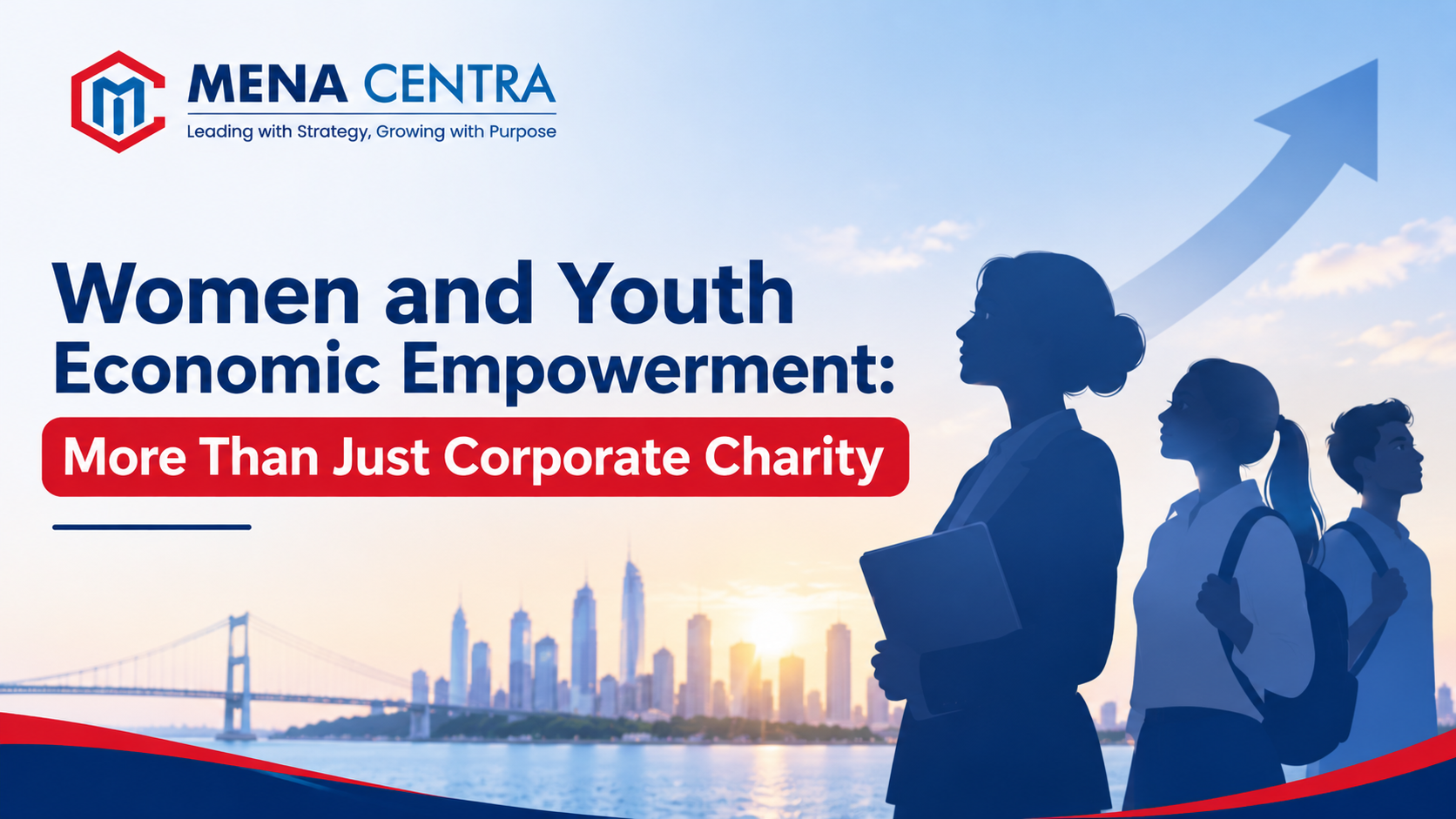
In Türkiye, women are starting new companies at a growing rate, yet their overall presence in the workforce is still less than half that of men. That gap says a lot. It shows there’s real business potential sitting untapped, just waiting for the right support and partnerships to bring it forward.
This is where women and youth economic empowerment comes in. It’s not about ticking a CSR box or writing a cheque once a year. It’s about building the kind of access, finance, networks, markets, that actually helps people grow businesses and stay in them for the long run.
For years, companies have approached economic empowerment through donations, scholarships and training programmes. These initiatives have genuine value, nobody disputes that. But they rarely translate into lasting economic independence on their own. A certificate does not open a lending window, and a one-off grant does not build a client base.
Meaningful empowerment requires access to finance, established business networks, technology and a genuine role in decision-making. Türkiye represents exactly this kind of opportunity, a market where MENA’s investment capacity can meet local entrepreneurial ambition. Empowerment becomes substantive only when individuals and enterprises can participate in, contribute to, and benefit from economic growth rather than simply receiving support and moving on.
To understand where the real opportunity lies, it helps to look at two different pictures, how women are showing up in new business formation, and how they are showing up in the workforce at large.
Women’s role in Türkiye’s formal business ecosystem is evolving, gradually but consistently. According to TOBB’s July 2026 company-establishment statistics, women accounted for 15.7% of partners in newly established joint-stock companies, 17.1% in newly established limited-liability companies, and 22.1% in newly established cooperatives.
These figures reflect women’s share among partners in new businesses, not full ownership or leadership. Even so, for investors and companies seeking to diversify their supplier and partnership base, this is a meaningful indicator of where new commercial relationships could take root.
This is where the gap becomes most apparent. As per World Bank/ILO figures for 2025, Türkiye’s female labour-force participation rate stood at 37.145%, compared with 71.9% for men. Among young women aged 15 to 24, participation was lower still, at 34.784%.
What does this mean for a business trying to scale? It points to a substantial, under-utilised talent pool outside the formal economy. Companies that find ways to engage this group, through flexible roles, structured training or direct recruitment, gain early access to a workforce that many competitors continue to overlook.
Expanding women’s participation is not only about increasing numbers. It is equally about helping existing enterprises move past early-stage barriers. OECD research identifies limited access to finance, weaker business networks and gaps in business-development support as persistent challenges for women entrepreneurs in Türkiye.
Türkiye has introduced measures to address some of these barriers, including discounted social-security premium payments for eligible women working in trades and crafts outside a workplace.
For investors, this creates openings across several sectors:
Venture capital, angel investment, joint ventures and structured mentoring can help emerging enterprises progress from modest local operations to businesses with genuine commercial reach.
Building these partnerships comes down to two things knowing where to look for the right connections, and knowing how to structure a relationship that benefits both sides.
Foreign investors need not navigate the Turkish market without guidance. Institutions such as KOSGEB, regional chambers of commerce, industry associations and entrepreneurship networks already exist to bridge this gap. These organisations can connect businesses with relevant support programmes, local contacts and enterprise-development opportunities, reducing both time and uncertainty.
Capital alone does not build a lasting partnership. Established companies can integrate women-led and youth-driven enterprises directly into their operations through:
That said, these models only succeed with proper commercial due diligence, a clear understanding of local regulation, and well-defined responsibilities on both sides.
Türkiye offers manufacturing depth and a strategic position connecting Europe, the Middle East and Central Asia. MENA economies bring investment capital, expanding consumer markets and growing infrastructure needs. Together, these conditions form a strong foundation for cooperation across manufacturing, logistics, construction, renewable energy and industrial supply chains.
Bringing women-led enterprises and young innovators into this landscape broadens the available workforce and supplier base for all parties involved. Embassies, trade organisations, chambers of commerce and economic development agencies each have a role in connecting businesses and supporting this bilateral cooperation. Inclusive participation builds more resilient economic relationships, not necessarily higher returns, but certainly a broader and steadier foundation for growth.
MENA Centra works at the intersection of investors, businesses, policymakers and institutional stakeholders across regional markets. With Strategic Partnerships and Economic Diplomacy, it helps translate these economic opportunities into practical, working relationships, supporting institutional engagement and long-term regional development along the way.
In practice, this means helping investors understand which sectors, institutions and local partners are worth engaging with, rather than approaching the Turkish market with guesswork. MENA Centra also works alongside chambers of commerce, trade bodies and government agencies to open channels that individual companies might otherwise take years to build on their own.
For businesses looking to include women-led enterprises and youth-driven startups in their growth plans, this kind of institutional backing makes the process considerably more straightforward, connecting intent with actual, workable opportunity.