06 October 2026 Admin
For years, sustainability has been at the center of the global economic conversation. Governments and businesses have been encouraged to reduce emissions, consume fewer resources, improve efficiency, and limit environmental damage. These objectives remain essential. But a new question is increasingly emerging: What if the economy could do more than reduce the damage it creates? What if economic activity could actively restore, renew, and strengthen the systems on which it depends?
This is the idea behind the regenerative economy.
A regenerative economy moves beyond the traditional concept of sustainability. While sustainability often focuses on maintaining resources and reducing negative impacts, regeneration seeks to leave natural, economic, and social systems stronger than they were before.
This distinction may become increasingly important for Türkiye as it navigates a period of significant economic, technological, agricultural, and industrial transformation.
Türkiye possesses several characteristics that make the regenerative economy particularly relevant: a substantial agricultural base, strong manufacturing capacity, an entrepreneurial private sector, growing technological capabilities, significant renewable-energy potential, and a strategic position connecting European, Middle Eastern and Asian markets.
Across the country, we are already seeing elements of this transition.
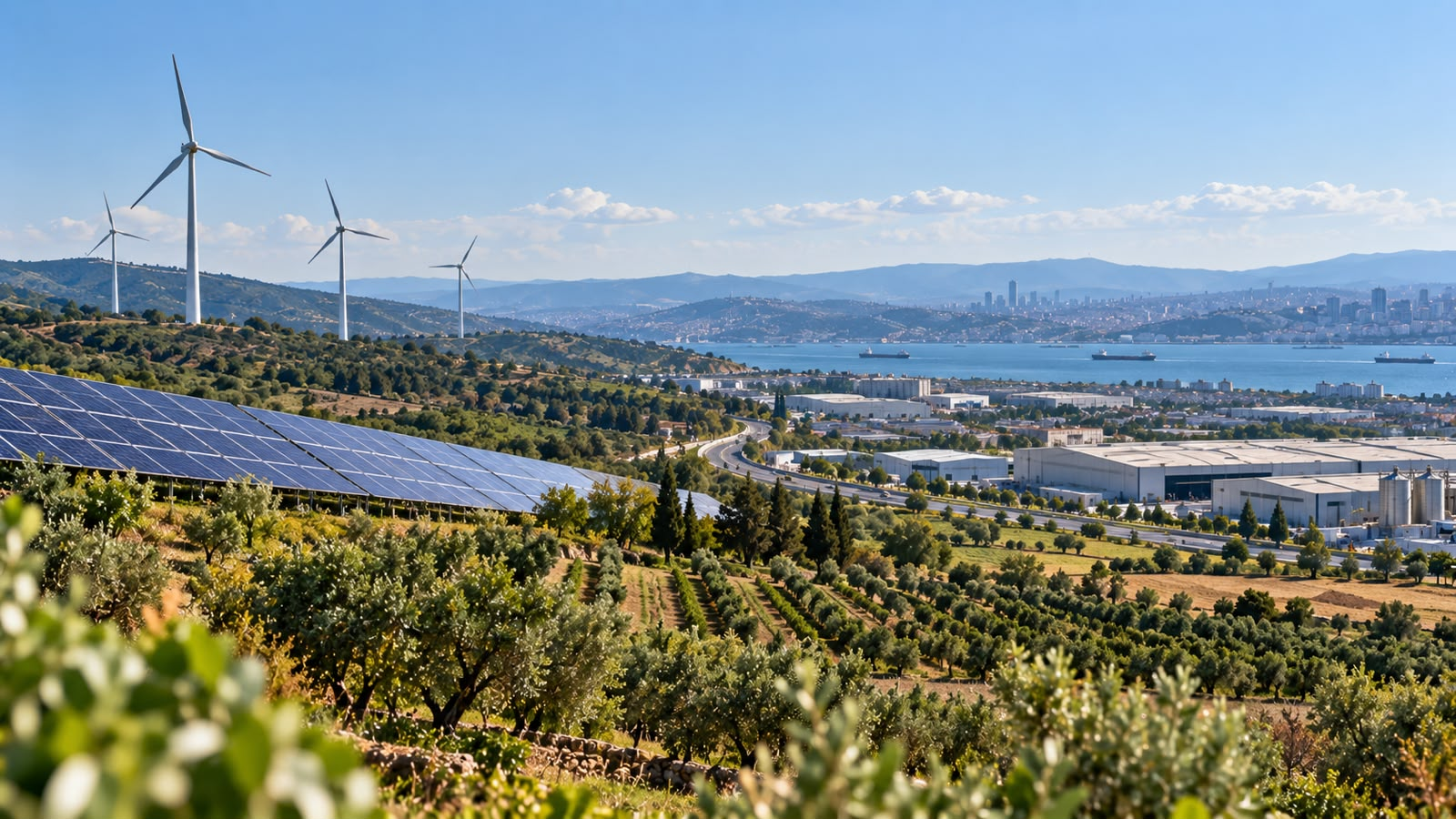
Investment in solar, wind and other renewable-energy sources has expanded considerably. New approaches to energy efficiency, waste management and circular production are becoming more visible. Businesses are increasingly exploring local sourcing, cleaner manufacturing and resource efficiency, while agricultural discussions are gradually moving towards soil health, organic production, water efficiency and more resilient farming practices.
These developments deserve recognition and, importantly, further support.
Renewable energy provides one of the clearest examples. Moving from fossil fuels towards solar and wind power is already an essential sustainability objective. But a regenerative approach asks additional questions.
Can renewable-energy investments also strengthen local economies? Can components increasingly be manufactured domestically? Can new industries create skilled employment for young people and women? Can energy projects contribute to regional development? Can technological knowledge generated through these investments strengthen Türkiye’s industrial capacity and eventually become an export advantage?
When these elements come together, renewable energy becomes more than an environmental intervention. It becomes an economic development strategy.
Installing solar panels reduces dependence on fossil fuels. But building an ecosystem around solar technology, manufacturing components, developing engineering expertise, training technicians, supporting SMEs, investing in research and creating export capacity, generates a much broader economic impact.
The same principle applies to wind energy, electric mobility, sustainable construction, recycling technologies and energy-efficient manufacturing.
A regenerative economy therefore should not be understood simply as an environmental agenda. It is equally an industrial, investment and competitiveness agenda.
For Türkiye, the country already has substantial manufacturing infrastructure and a sophisticated network of small and medium-sized enterprises. Connecting these capabilities with the emerging green economy could allow environmental transition and industrial development to reinforce each other.
Rather than viewing environmental standards solely as costs imposed on businesses, they can increasingly be understood as incentives for innovation, technological upgrading and access to future markets.
Conventional agricultural systems can gradually deplete soil, water and biodiversity when resources are continuously extracted without sufficient restoration. Regenerative agriculture reverses this logic.
The objective is not simply to produce food with fewer negative effects. It is to improve soil health, restore biodiversity, conserve water and strengthen the long-term productivity of agricultural land.
For Türkiye, with its extraordinary agricultural heritage and regional diversity, this represents both an environmental responsibility and an economic opportunity.
Supporting farmers who adopt regenerative practices can generate multiple benefits simultaneously: healthier soil, stronger rural economies, greater resilience to climate pressures, better-quality products and new opportunities for value-added exports.
One of the most promising aspects of regenerative economics is its renewed attention to local value creation.
Globalisation created enormous efficiencies, but it also produced supply chains in which communities sometimes became disconnected from the products they consume and the resources they possess.
A regenerative economy attempts to reconnect these relationships.
A Turkish company sourcing responsibly from Turkish farmers, manufacturing locally, employing local workers, reducing waste and reinvesting part of its growth into its supply chain creates several layers of value simultaneously.
Most importantly, economic value circulates through a wider ecosystem rather than being extracted from it, and knowledge remains within the economy.
Governments can establish regulations, incentives and infrastructure, but much of the regenerative transition will ultimately happen through businesses.
This is particularly relevant for entrepreneurs and SMEs.
The next generation of successful companies may increasingly be evaluated not only by what they sell, but by what economic ecosystem they create around their products.
Where do their materials come from? Who benefits from their supply chains? How much value is created locally? What happens to products and packaging after consumption?
Does business growth improve or degrade the resources on which the company depends?
These questions are gradually moving from the margins of corporate responsibility into the centre of business strategy.
Türkiye should take pride in the progress already being made in renewable energy, cleaner production, technological innovation and new approaches to agriculture and industrial efficiency. At the same time, these developments should be seen as the beginning of a much larger opportunity.
The ambition should not only be to make the existing economy less harmful.
It should be to build an economy that continuously replenishes its sources of prosperity.
And an economy in which environmental responsibility is not perceived as an obstacle to growth, but as a source of the next generation of growth.
For Türkiye, many of the foundations are already emerging. The task now is to recognize them, connect them, invest in them and scale them up.