25 August 2026 Admin
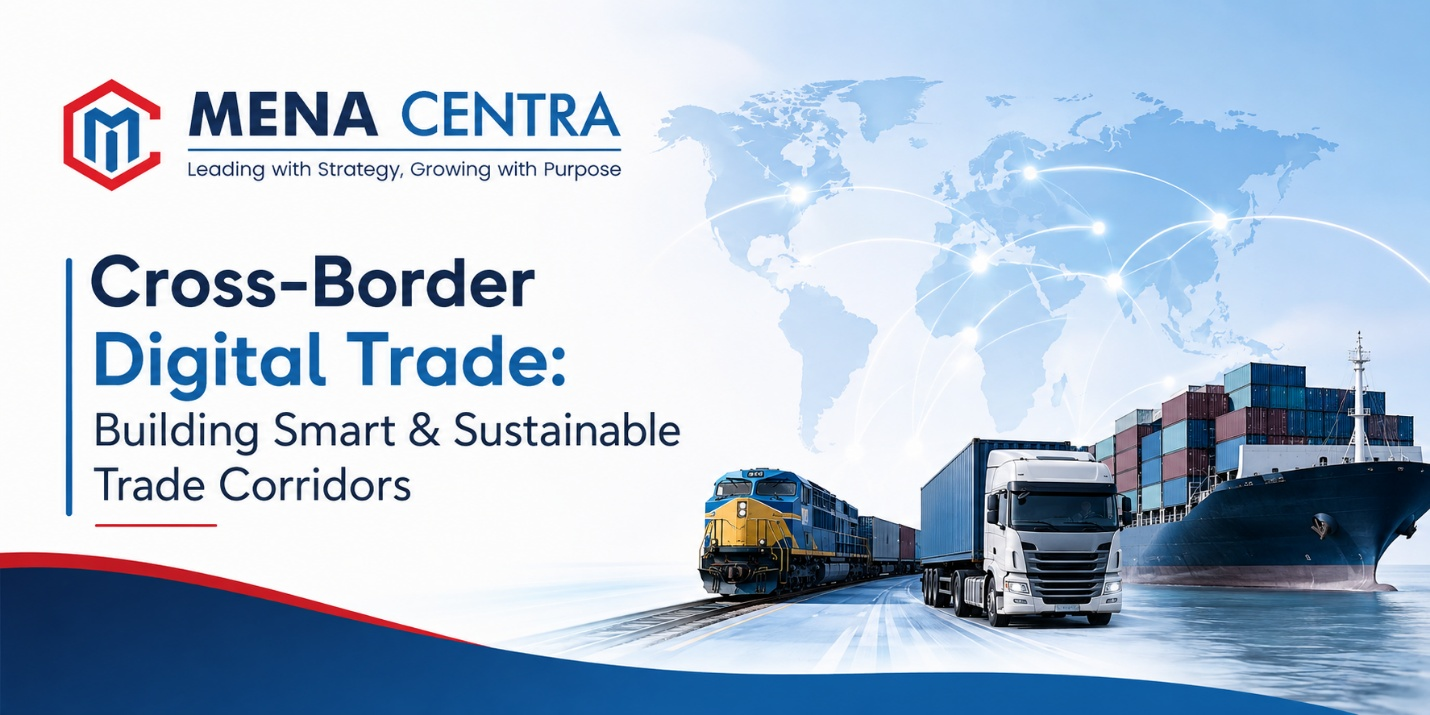
Global trade is growing. And the traditional systems designed to manage it are now facing trouble. Every year more goods, data, and payments travel across different borders. Businesses now want these transactions to happen faster. But still many trade corridors run on paperwork and manual approval systems. This hampers the coordination between agencies.
Physical infrastructure alone is no longer enough. A port can have the best cranes and berths but if customs clearance still takes three days because of paperwork then the corridor is not efficient. The traditional trade models have to evolve. Here, cross-border digital trade brings technology into every step of the process including documentation, payments, and delivery. Goods and information will now move at the same speed.
This shift is making trade corridors more efficient and intelligent. It means cross-border connectivity runs on data, automation, and shared digital standards. Roads and rail lines are no longer enough for everything.
Cross-border digital trade is the use of digital tools and systems to manage trade between countries. It replaces manual paper-based processes with connected digital workflows.
The difference between conventional trade and digital trade is clear. Take a shipment moving from a factory in one country to a retailer in another. In the conventional system, this shipment is followed by a stack of paper invoices and printed customs forms. Phone calls confirm delivery status. In a digital trade system, the same shipment moves through a single platform. Documents, payments, and customs checks happen electronically. Everyone involved can see the same information and that too in real time.
A digital trade ecosystem has five core components:
● Digital documentation replaces printed invoices and certificates with verified electronic records.
● Electronic customs lets authorities review and approve shipments online.
● Digital payments settle transactions faster with fewer errors.
● Secure data exchange lets trade partners share information safely.
● Smart logistics uses software to plan routes and manage inventory.
Traditional trade corridors carry problems that slow down the entire supply chain. Paper-based documentation can get delayed or lost. Customs checks take longer when officers review physical files one at a time. Many times, businesses cannot see exactly where their shipment actually is. Different countries have different regulations. Plus, logistics costs also rise with the cost of fuel, storage, and labour.
Digitalization solves each of these problems directly. A shipment tracked digitally can be located in seconds instead of days. Customs officers working with electronic filings can process approvals in bulk. When trade partners agree on shared digital standards, fragmented regulations become easier to align. Everyone reads the same type of record.
This is the foundation of cross-border digital trade. Fewer manual steps. Fewer delays. A clear picture of every shipment from start to finish.
The future-proof trade corridors have to be highly efficient with fast communication and clearance. And to achieve that, we need to encourage the following four systems.
Strong trade corridors mean better transport networks. Rail, road and ports need to align with the digital infrastructure. Only then will goods move with fewer interruptions. Trucks should not face a lot of barriers in leaving the factory, reaching the port, or customs clearance.
Smart infrastructure brings technology into physical trade systems. This includes IoT sensors, AI-powered planning and logistics prediction. A smart port can track containers automatically. It can predict congestion before it happens and adjust berth schedules accordingly. Live cargo tracking and automated clearance make the shipment move fast and without any guesswork.
Sustainability is now more important than it was ever. And renewable energy corridors are doing so by combining clean logistics, green ports, and renewable-powered industrial zones. This reduces the environmental cost of trade. Energy-efficient transportation and sustainable supply chains help corridors stay tough as fuel costs and environmental rules change.
None of this works without shared rules. Digital governance, data interoperability, and trusted digital identities let countries trust each other's systems. Standardized trade documentation means a customs officer in one country can verify a document issued in another.
When goods move faster everything connected to that movement benefits.
➢ Investors gain confidence in regions where shipments are predictable.
➢ Supply chains become more resilient.
➢ Disruptions get spotted before any bad is done.
➢ Neighboring countries trade more easily using shared digital systems.
➢ Digital infrastructure opens doors to new industries like logistics tech and digital finance.
➢ Regional integration improves as neighboring countries adopt compatible digital systems.
Corridors in the MENA region show how public-private collaboration turns geography into economic advantage.
Modern technologies are shaping global trade corridors in many different ways.
Technology Role in Trade Corridors
Artificial Intelligence Demand forecasting and route planning
Digital Twins Virtual models of ports and corridors to test changes before they happen
IoT Live monitoring of cargo and equipment
Blockchain Secure and tamper-proof trade records
Predictive Analytics Anticipating delays before they occur
Smart Border Management Faster cross-border checks
Cloud-Based Logistics Platforms Connecting every party in a supply chain
Building a smart trade corridor is not a task for one organization. Governments set the regulatory foundation. Infrastructure developers build the physical and digital pillars. Technology providers supply the tools for tracking and automation. Trade authorities enforce standards. Investors provide the capital needed to scale these systems. And regional organizations help align policy across borders.
Digital transformation requires both good technology and right governance. A country can install the most advanced sensors at its ports. But without clear policy and trusted coordination between agencies that technology will not reach its full potential.
MENA Centra works alongside governments, investors, and infrastructure developers. Together they design trade corridors that are efficient, connected, and sustainable. Through strategic advisory and policy framework development, MENA Centra supports cross-border collaboration. It helps plan smart infrastructure and digital trade ecosystems that will suit the conditions of the MENA region.
This work involves close stakeholder engagement. It helps different parties align on shared goals. It supports regional integration initiatives that connect markets of Turkey, the Gulf, North Africa, and Europe. The aim is simple. Help partners move from strategy to practical working systems.
Cross-border digital trade is becoming the foundation of strong and competitive economies. Intelligent connectivity, smart infrastructure, and renewable energy integration together build great trade ecosystems. Organizations and governments that invest in digital trade corridors now will benefit from the future regional and global opportunities.
The corridors built today will decide who dominates regional trade tomorrow. Countries that act early gain a real advantage over those who wait. The shift toward digital trade is not a passing trend, it is the new standard for how goods and economies will connect. Those building it first will have the upper hand in the future.